Synced Movie Nights
Start a film at the same minute on a streaming app, keep a voice call open in the background, and pause it together for snack runs. Picks rotate: she chooses Friday, he chooses Saturday.
miles apart, hearts together
Being in a relationship with a truck driver means falling in love with someone whose office is a 70-mph highway and whose Monday meeting might be in Laredo. Here are the habits, tools, and small rituals that long-haul couples actually use to stay close - including the playbook one Kansas City couple swears by.
By the NextStop Love editorial team · Updated June 5, 2026 · Reviewed by drivers and their partners
Couples who stay strong through long-haul trucking build their relationship around predictable communication, shared visibility, and small celebrations. The schedule rarely changes, so the routine has to be solid: a daily voice call window, a weekly virtual date, transparency about loads and ETAs, and a willingness to drive two hours to a truck stop for twenty minutes of in-person time. That's it. Everything else is decoration.
If you're married to a truck driver - or about to be - this is the article we wish someone had handed us on day one. We've pulled it together from drivers, their partners, and one couple in Kansas City whose system is so good we built half this guide around them.
Scheduled phone and video calls are the backbone of a healthy long-haul relationship. Random texts feel nice in the moment, but they create a quiet anxiety on both sides: when will he call? did she fall asleep already? is he okay? A predictable routine kills that noise.
The most stable couples we know run something close to this rhythm:
Talking through small details - what dispatch threw at him, what the dog did, what's on the grocery list - keeps both of you woven into each other's day. That's the whole point. Drivers report that the partners who ask "what does the route look like tomorrow?" rather than "when are you coming home?" build calmer, longer-lasting relationships.
consistency beats intensity
Forget the cringy "stare at each other on FaceTime for an hour" advice. These are the virtual rituals long-haul couples actually keep coming back to.
Start a film at the same minute on a streaming app, keep a voice call open in the background, and pause it together for snack runs. Picks rotate: she chooses Friday, he chooses Saturday.
He grabs a hot meal at a Pilot, she plates something at home, video call on a propped phone. Same table, 800 miles apart. Sounds silly until you try it - then it becomes weekly.
Tuck a short letter into his next bag-pack. He hides one in her purse before he leaves. Texts disappear; paper sticks around the visor for months.
A shared phone widget counting down to his next 34-hour reset. Tiny, visual, and it reframes distance as a finish line instead of a wall.
Surprise layover visits are one of the most underrated weapons in a long-haul relationship. If your driver runs a regular lane - say, a weekly route through Charlotte, Memphis, or Oklahoma City - you can coordinate a short in-person window at a truck-friendly location. Twenty minutes of real eye contact can carry a couple through the next two weeks.
Here is how the smart couples pull it off:
| Layover Type | Best Meetup | Avoid |
|---|---|---|
| 30-60 min lunch break | Truck-friendly diner near his fuel island - Iron Skillet, Petro, or any Flying J with parking. | Downtown restaurants. He can't park a 53-foot trailer in a metered spot. |
| 10-hour DOT reset | Drive out, share dinner, sleep in the bunk together, breakfast on his way out. | Hotels that don't have rig parking. Always check before you book. |
| 34-hour weekly reset | Rent a hotel near a TA, treat it like a mini-vacation - even if you're 4 states from home. | Trying to fix big relationship issues in 34 hours. Save those for home time. |
Bucket brigade: Here's the catch - surprise visits only work if his dispatcher hasn't rerouted him. Always confirm the night before, and have a backup plan. Showing up at a truck stop while he's been diverted 200 miles north is a heartbreaker no one needs.
Time apart and inconsistent communication breed insecurity fast. The fix isn't more reassurance - it's more visibility. Jealousy in trucker relationships usually comes from not knowing, not from bad behavior. Sharing load info, explaining a delay (a live-unload window in Atlanta can eat four hours easy), and using a shared tracking app turns the unknown into the obvious.
Jealousy in this lifestyle is almost never about the other person - it's about the silence. Fill the silence with small honest updates, and the jealousy quietly leaves the room. - Editorial note, NextStop Love
If trust is still shaky after a few months of this, the issue isn't the trucking - it's older than the relationship. Worth saying out loud and dealing with directly. For more on this, see our guide on long-distance relationships with truckers.
Five years, three lanes, one marriage that keeps getting stronger. Here's the system that did it.
One driver out of Kansas City told us that what saved his marriage wasn't romance - it was logistics. He and his wife sat down one Sunday afternoon with a paper calendar, two cups of coffee, and a sharpie. They mapped out his run cycle, her work shifts, and built a weekly playbook that has barely changed in three years.
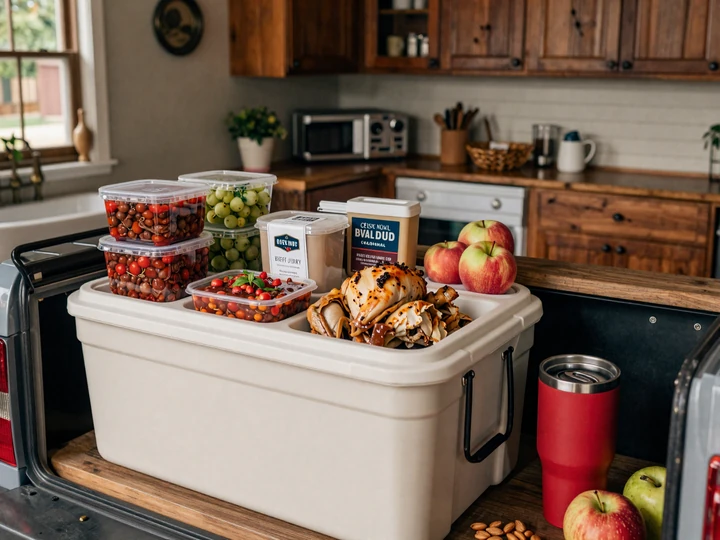
Their system has three pillars: synced calendars, shared meal prep, and weekend chore rotation. On her off-Sundays, she meal-preps containers he takes on his next run - chili, baked chicken, cornbread, the works. On his home weekends, they split the list: she takes groceries and laundry, he takes cab cleanout, oil checks, and resupplying the bunk. Neither one is doing everything; both are doing something. He said it reduced his stress more than any pay raise ever did.
We stopped trying to feel like a normal couple and just built our own system. Sundays we sit at the kitchen table - calendar, coffee, run sheet, school stuff. Twenty minutes of planning saves us a week of arguing. She knows when I'm rolling, I know what she's got on her plate. We're a team on the road and a team at home.

The partner at home plays a quiet but huge role in a driver's physical health. Truck-stop food gets old fast, and after the third week of fried-everything a driver's mood, sleep, and patience all start to slip. A partner who packs a smarter cooler is doing real work, not just a sweet gesture.
The reliable starter pack drivers swear by:
For the relationship side, see our guides on balancing trucking schedules with relationships and life on the road and dating.